
Gentle Dental Care for Growing Smiles
A child’s first years with the dentist shape how they feel about dental care for the rest of their life. A calm, positive first visit makes the next one easier, and healthy baby teeth set the stage for healthy permanent teeth. At Gettings Family Dental, Dr. Nicole Gettings provides patient, kid-friendly dental care that helps young patients build good habits and feel comfortable in the dental chair.
We care for children from Loveland, Mason, Montgomery, Lebanon, Milford, and the greater Cincinnati area. Call (513) 677-3656 to schedule your child’s appointment.
A Kids’ Dentist Who Understands Parents
Dr. Gettings and her husband, Peter, are raising two boys of their own, so she understands the questions parents bring to their child’s appointment. When she isn’t in the office, you’ll often find her family exploring local parks and riding bikes on the bike path. That perspective shapes how she cares for young patients: she explains what she’s doing in words a child can follow, answers parents’ questions without rushing, and helps both of you feel informed about your child’s dental health.
What Is Children’s Dentistry?
Children’s dentistry is dental care focused on the needs of young patients, from a baby’s first tooth through the early teen years. It combines preventive treatments, early detection of developmental problems, and age-appropriate care in a setting designed to keep kids at ease. Because a child’s mouth changes so quickly, the focus shifts from stage to stage, from protecting baby teeth to guiding the arrival of permanent molars.
When Should Your Child First See the Dentist?
The American Academy of Pediatric Dentistry recommends that children see a dentist when their first tooth appears or by their first birthday, whichever comes first. An early visit lets us check that teeth are coming in normally and gives parents a chance to ask about teething, brushing, and feeding habits.
Baby teeth may be temporary, but they matter. They help children chew and speak clearly, and they hold space for the permanent teeth developing underneath. When a baby tooth is lost too early to decay, neighboring teeth can drift into the gap and crowd the permanent tooth that should come in there.

Children’s Dental Services at Our Loveland Office
- Kids’ Dental Exams and Teeth Cleanings: Gentle checkups every six months that track growth and remove plaque that little hands miss at home.
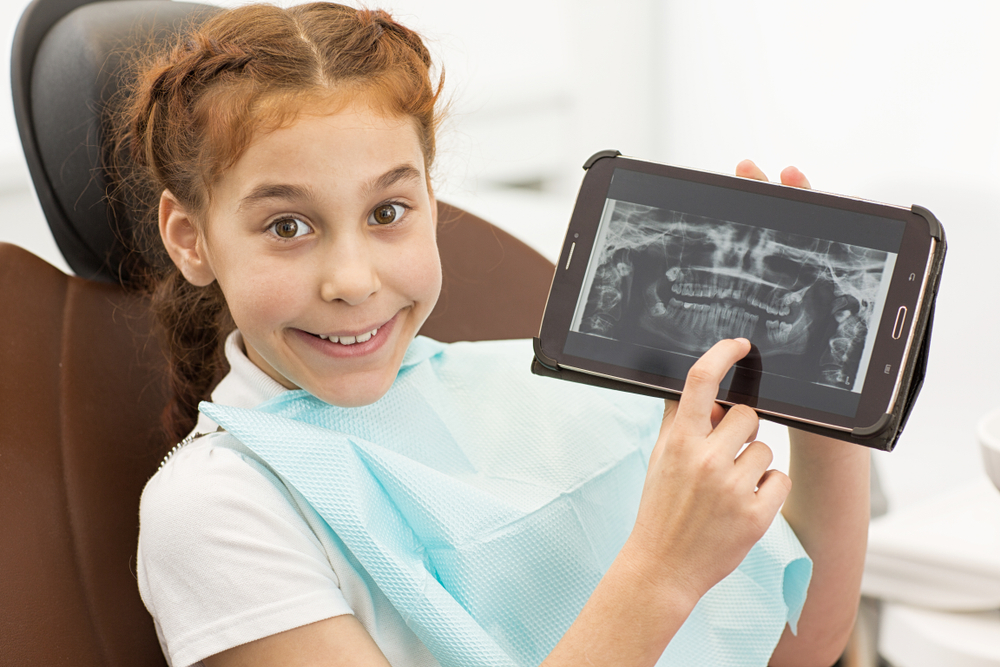
- Digital X-Rays: Low-radiation images taken only when needed to check for cavities between teeth and to see how permanent teeth are developing.
- Fluoride Treatments: A quick varnish application that strengthens young enamel and lowers cavity risk.
- Dental Sealants: Thin protective coatings painted onto the grooves of back teeth, where most childhood cavities begin.
- Tooth-Colored Fillings: Natural-looking composite fillings to repair cavities in baby teeth and permanent teeth.
- Habit Guidance: Practical advice on thumb sucking, pacifier use, and bottle or sippy cup habits that can affect developing teeth.
- Bite and Alignment Monitoring: Regular checks of how the jaws and teeth are developing, with a referral for an orthodontic evaluation when the timing is right.
- Emergency Dental Care for Kids: Prompt help for chipped teeth, knocked-out teeth, and mouth injuries from falls or sports.
How Your Child’s Smile Changes Over Time
Knowing what’s ahead helps parents understand why we focus on different things at each visit. Every child develops on their own timeline, so these ages are general guides.
- Around 6 Months: The first baby teeth, usually the lower front teeth, begin to appear.
- By About Age 3: Most children have all 20 baby teeth in place.
- Around Age 6: The first permanent molars come in behind the baby teeth, often without any baby tooth falling out first.
- Ages 6 to 12: Baby teeth loosen and fall out as permanent teeth replace them, and we watch spacing and alignment closely.
- Around Age 12: The second permanent molars erupt, completing most of the adult smile.
Helping a Nervous Child Feel Comfortable
Some children walk in excited, and others need a little more time. Both are completely normal, and parents can help set the tone at home.
- Talk about the visit in simple, positive terms, such as “the dentist is going to count your teeth,” rather than promising that nothing will hurt.
- Read a picture book or watch a show about a character visiting the dentist.
- Schedule appointments when your child is rested and fed rather than near nap time.
- Let your child bring a favorite stuffed animal or small toy.
- Stay calm yourself, since children quickly pick up on a parent’s nerves.
Protecting Your Child’s Teeth at Home
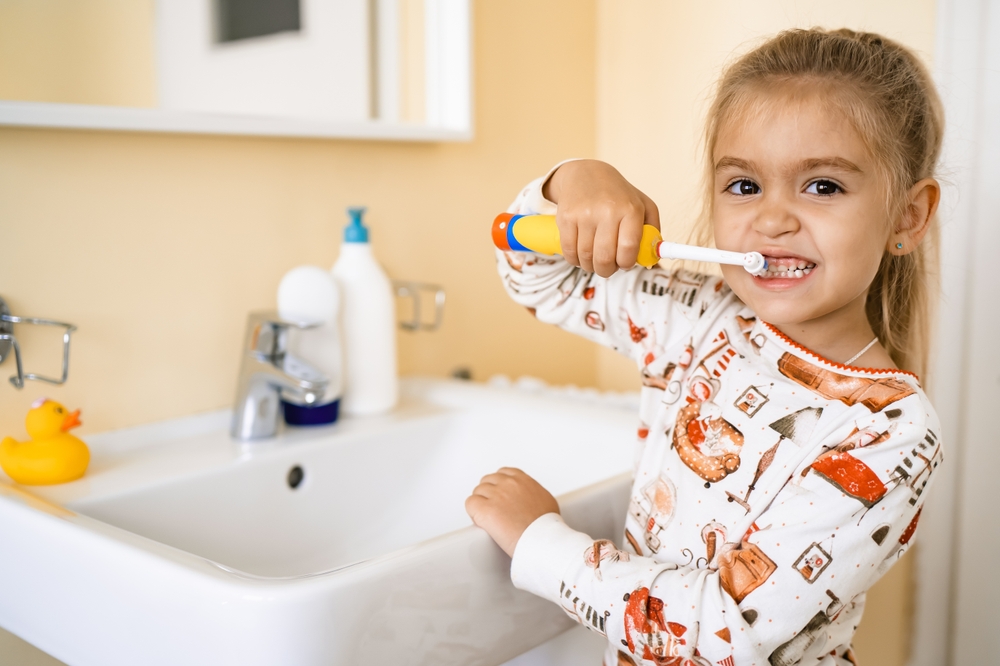
The habits children learn early tend to stick. The ADA recommends a smear of fluoride toothpaste about the size of a grain of rice for children under three and a pea-sized amount for children ages three to six. Brush twice a day, and help with brushing until your child can do a thorough job alone, which is often around age six to eight. Start flossing once two teeth touch.
What children drink matters as much as what they eat. Avoid putting a baby to bed with a bottle of milk or juice, since sugary liquid pooling around the teeth overnight is a leading cause of early childhood decay. Offer water between meals, and save juice and sweets for mealtimes. For kids in sports, a properly fitted mouthguard helps protect against chipped and knocked-out teeth.
Frequently Asked Questions
In most cases, yes. Decay in a baby tooth can spread, cause pain, and lead to infection, and some baby molars stay in place until age 10 to 12. Losing a baby tooth early can also allow neighboring teeth to shift into the space. Dr. Gettings will explain the options for your child’s specific tooth and whether treatment makes sense.
Sealants are usually placed on the first permanent molars soon after they come in, around age six. The second permanent molars follow around age 12. Placing sealants shortly after eruption protects these teeth during the years when cavity risk is highest. Some children with deep grooves in their baby molars may benefit from sealants on those teeth as well.
Yes, when used in the right amount. The ADA recommends a rice-grain-sized smear for children under three and a pea-sized amount for ages three to six. Supervise brushing and encourage your child to spit out extra toothpaste rather than swallow it. Using the recommended amount gives young teeth protection while keeping fluoride intake low.
Call our office right away. If it’s a permanent tooth, pick it up by the crown, rinse it briefly if it’s dirty, and store it in milk on the way to our office. Baby teeth are generally not put back in, since doing so can damage the permanent tooth underneath, but we still want to check for other injuries. Quick action gives a permanent tooth the best chance of being saved.
We check your child’s bite and alignment at every visit. Signs worth watching include crowding, a crossbite, or front teeth that don’t meet. The American Association of Orthodontists recommends a first orthodontic evaluation by age seven, and we’ll let you know if a referral makes sense. Catching bite problems early can make treatment simpler.
Schedule Your Child’s Dental Visit in Loveland
A positive start with the dentist gives your child a head start on a lifetime of healthy teeth. Dr. Gettings and our team look forward to meeting your little one.
Contact Gettings Family Dental at (513) 677-3656 to schedule your child’s dental appointment. We proudly serve families throughout Loveland, Mason, Montgomery, Lebanon, Milford, and the greater Cincinnati area.